

According to the National Institutes of Health, the human body is a complex ecosystem that hosts hundreds of trillions of microorganisms, including bacteria, fungi, and archaea. This diverse population, which coexists with the host in dynamic equilibrium, denotes the microbiome.
Although this term refers to all microbial communities throughout the body, this guide focuses on the intestinal microbiome, that is, the microbiota of the gastrointestinal tract.
Microbome testing, also known as gut flora analysis, is one of the leading modern diagnostic approaches, significantly improved in recent years by the development of molecular methods.
Modern commercial tests enable the collection of a sample at home, after which laboratory analysis confirms the composition, quantity, and percentage of microorganisms in the intestines.
Some companies go a step further, using the obtained microbiological data to create personalized probiotic formulations, aiming to adapt the supplementation to the individual characteristics of the intestinal microbiota.
The research team systematically evaluated, laboratory tested, and analyzed all relevant and leading microbiome tests currently available on the market. This guide presents a comprehensive overview of our findings, with recommendations on which tests in 2026 are most reliable, relevant, and informative for users.
For readers who want a quick overview of the conclusions without a detailed review of the full analyses, a summary of the main recommendations is provided below.
What is the Best Gut Microbiome Test?
Summary of Our Recommendations for the Best Microbiome Test
- Best overall: Viome [2026 Editors’ Choice]
- Best probiotic options: Viome
- Best budget option: Ombre [formerly Thryve]
- Best whole-health insight: Viome
- Best for pregnant people and their babies: Tiny Health
- Best option for using health insurance: Floré
- Best for privacy: Viome
Who Should Take a Microbiome Test?
According to modern scientific knowledge, microbiome testing could be useful for anyone who has access to it. Technological progress in sequencing and bioinformatic analyses, together with a more advanced understanding of the role of the intestinal microbiota in maintaining the body’s homeostasis, has enabled test results to have concrete, informative, and practical value.
However, the interpretation of the findings should be undertaken with a qualified health professional, so that any recommendations are based on the individual clinical context.
Most modern microbiome tests are based on molecular analyses of stool samples to identify microbial species and assess their relative abundance in the gastrointestinal tract. The best quality tests allow insight into some of the following aspects:
- The degree of microbial diversity and richness, as indicators of the stability and resistance of the intestinal ecosystem
- Comparison of individual microbiological profiles with reference databases
- Functional potential of microbiota composition on general health status, metabolic regulation, and aging-related processes
- Potential guidelines for improving health through targeted modification of diet and other lifestyle habits
An imbalance in the intestinal microbiota (dysbiosis) can destabilize the intestinal ecosystem and reduce its protective functions. Such a condition can increase the body’s sensitivity to colonization by opportunistic or pathogenic microorganisms, including specific strains of bacteria and viruses.
The consequences of such changes can be manifested through various systemic and gastrointestinal symptoms, such as:
- Reduced efficiency of the immune response
- Constipation, diarrhea, or a clinical picture of irritable bowel syndrome
- Bloating and increased production of intestinal gases
- Weakened absorption of macro- and micronutrients
- Disturbances of concentration and subjective feeling of mental slowness
- Dermatological changes and impaired skin quality
- Accelerated biological aging
- Difficulty regulating stress
- Affective disorders
- Persistent low-gradient inflammation
In addition to gastrointestinal tests, some analyses assess microbial communities in other anatomically specific niches, such as the vaginal or oral microbiome, thereby expanding understanding of the role of microorganisms in different organ systems.
It is crucial to emphasize that there is no universal reference pattern of an “optimal” microbiome. The structure and composition of microbial communities are individual. Scientific data show that the microbiological profiles of two healthy people can differ, while specific similarities can be observed between people with completely different clinical statuses.
This variability arises because functional expression of microbial genes depends on the host’s genetic background, immune response, diet, and other factors.
Interpretation of microbiome testing results requires care and an understanding of the complex interactions between the host and its microbial community, while avoiding conclusions based solely on microbial composition.
The way microbiome tests work can be compared to the principle of genetic ancestry tests. Genealogical tests use extensive reference databases of sequenced genomes and their geographic distributions to estimate an individual’s ancestry.
The same microbiome analyses compare the individual composition and percentage representation of microorganisms with previously processed datasets. Based on these comparative models, statistical estimates are generated of potential health status patterns, metabolic characteristics, and tendencies towards specific disorders.
The accuracy and interpretative value of the obtained results, however, depend on the quality of the reference bases, the representativeness of the samples, and the sophistication of the bioinformatics algorithms used in the analyses. The more extensive and methodologically rigorous the database, the more potentially reliable the conclusion.
On the other hand, it is crucial to clearly emphasize that microbiome testing does not have the status of a diagnostic procedure in the clinical sense. The results do not represent a medical diagnosis nor can they replace the professional opinion of a doctor. If there are symptoms or real complaints, it is necessary to contact your doctor for adequate additional tests and to make therapeutic decisions based on medical opinion.
How Do Our Top Recommended Tests Compare?
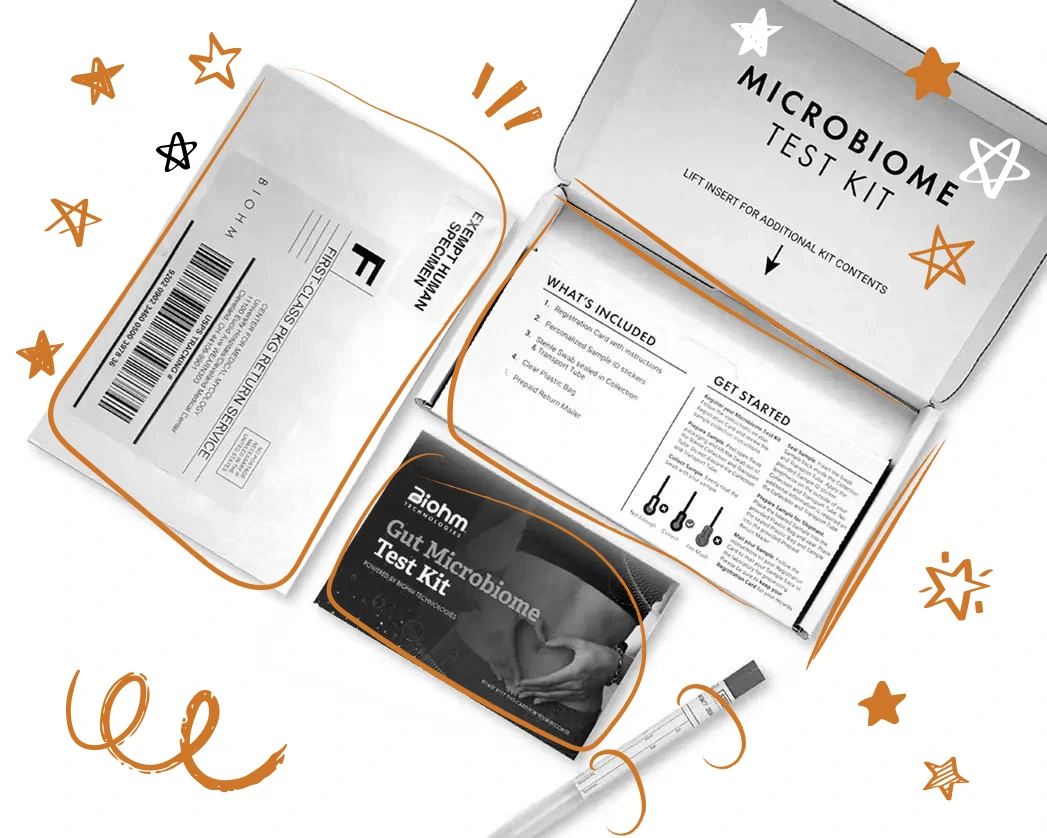
There are several microbiome tests you can do at home, and new products are coming out all the time. The research team tested and compared the best-known options, including Viome, Wellnicity, BIOHM, Psomagen, Ombre (formerly Thryve), Sun Genomics (Flore), and others, to make our recommendations.
If your budget allows, Viome’s most comprehensive test, the Full Body Intelligence Test ($289), may be your best bet for detailed, actionable insights. For those looking for good value at a lower starting price, we highlight the three best tests for:
- Viome Gut Intelligence Test (our top recommendation)
- Tiny Health
- Ombre Gut Health Test
Below is an overview table detailing these three tests:
| Viome | Tiny Health | Ombre | |
| Current price | $169 | $229 | $120 |
| Sequencing method | AI-driven metatranscriptomics | Deep shotgun metagenomics | 16s rRNA |
| Approx wait time after shipping back | 2-3 weeks | 4-6 weeks | 3-4 weeks |
| Tests for bacteria | ✅ | ✅ | ✅ |
| Tests for fungi | ✅ | ✅ | |
| Tests for archaea | ✅ | ✅ | |
| Tests for parasites | ✅ | ✅ | |
| Tests for phages | ✅ | ✅ | |
| Tests for viruses | ✅ | ✅ | |
| Custom supplement option | ✅ |
This shows how advanced Viome’s in-house hardware and software development is, enabling a rapid result, using a sequencing method that is too expensive and demanding for other companies.
How Do Microbiome Tests Work? What The Process Is Like For You?
The microbiome testing process is relatively simple. Although individual tests may vary, most follow these basic steps:
Step 1: Buying the test
This guide can help you decide which microbiome test is best for you. Once you’ve decided, visit the manufacturer’s website and order your test kit. You will usually receive it within 5-10 working days.
Step 2: Sample collection
Gut microbiome testing requires extracting of nucleic acids (DNA or RNA, depending on the test) from stool. The sample is collected using a paper pad and a small spoon. Don’t worry – the process is simple and hygienic, as only a very small amount of sample is required and the paper is easily placed over the toilet bowl.
Step 3: Sending the sample
The sample is then sent to the company in a post box, and from there it arrives at the laboratory for analysis.
Step 4: Sample analysis
Laboratory technicians extract nucleic acids from your sample, sequence them, and compare them to reference databases. The sequencing method used and the analysis approach depend on the company. The process can take up to a month, or less.
Step 5: Getting results
You will usually receive your test results within 2-4 weeks. Although different companies may emphasize different analyses, all tests provide detailed information about the species and classes of microorganisms in the gut and how their composition may affect health, nutrition, or disease risk.
The results often include lifestyle recommendations, such as a customized diet, nutritional supplements, and probiotics that you can incorporate into your daily routine.
Microbiome Testing FAQ
What Kind of Sample Does a Microbiome Test Require?
Microbiome testing requires a stool sample taken at home. It may sound scary, but collecting a sample is actually a simple and hygienic procedure. Some companies send a paper pad to place on the toilet bowl, while others allow you to collect the sample with toilet paper.
The slight discomfort of taking a sample is quickly forgotten when you consider the valuable information you get from testing.
How Long Does it Take To Get Results?
Microbiome test results usually arrive within 2-4 weeks or faster. The time to obtain results is affected by the number of samples received, possible mail delays, and the testing methodology used. Most companies notify patients when the sample arrives at the lab, and some even offer regular updates during analyses.
What Will Microbiome Test Results Tell Me?
The results usually show the concentrations of different bacteria in the gut, while some tests also include information about the presence of viruses and fungi. Quantities are most often shown in percentages.
The balance of microorganisms in the gastrointestinal tract provides insight into overall health and can help you understand how that balance affects your overall well-being. Companies conclude by comparing your results to large microbiome databases, such as the American Microbiome Project.
The most advanced companies, like Vioama, use artificial intelligence to connect your data with all available scientific research. That way, they can compare your results with those of people with a similar microbiome and provide insights into your health.
It is crucial to note that microbiome tests are not FDA-approved and should not be used as diagnostic tools. They primarily serve to gather information that can help you modify your eating habits, supplementation, and other aspects of your lifestyle.
Should I Change My Diet If the Results Say No?
Following a microbiome-focused diet can make a big difference to your health, provided you avoid the foods you’re allergic to. However, some dietary changes can decrease nutrient levels, so it’s always best to consult a doctor before making any major changes.
Are Custom-Made Probiotics Worth It?
Are custom probiotics worth it? Personalized probiotics are really worth it. Buying ready-made probiotics without prior testing is often unreliable. Testing lets you choose at least one product with strains your results recommend, but nothing compares to a fully customized solution.
Such probiotics contain the strains you need, in optimal amounts. In addition, many personalized probiotic subscription plans include free testing, allowing the formula to be updated as your health and body needs change.