

More and more people are reaching for alcohol because of the short-term mood lift and the ability to reduce the feeling of tension and increase relaxation. Under the influence of alcohol, a person can have the impression of greater self-confidence and an easier connection with others.
However, pleasant and harmless effects often backfire in the long run. Long-term and frequent alcohol consumption significantly impairs the quality of mental health, including the worsening of existing depressive symptoms.
Scientific studies link excessive alcohol consumption with a wide range of psychological problems. The spectrum includes the weakening of memory and reduced cognitive abilities, up to the development of anxiety disorders and an increased risk of suicidal behavior. The mechanism of these changes lies in the effects of alcohol on the central nervous system.
Alcohol disturbs the balance of neurotransmitters, chemical substances that are responsible for the regulation of emotions, motivation, stress, and general mental functioning. As intake increases, the brain becomes less efficient at regulating mood and stress responses, leading to a vicious cycle of emotional instability.
Approximately 63% of adults in the United States consume alcohol daily; understanding its long-term psychological consequences is of particular importance. In the rest of this guide, we explain in detail the impact of alcohol on mental health, the potential consequences, and why it is crucial to approach this topic with seriousness and information.
How Alcohol Affects Your Brain Chemistry
Alcohol is known as a central nervous system depressant, meaning it slows down brain activity. Although it sounds simple, the effects of alcohol are much more complex. Alcohol has been proven to disrupt the precisely coordinated chemical balance in the brain, affecting the flow of thought, feelings, and reactions.
Long-term exposure to such changes can have lasting effects on mental health. However, to really understand this process, one must grasp the role of neurotransmitters.
Neurotransmitters are special chemical substances that enable communication between neurons. They regulate emotions, motivation, attention, energy, and many other psychological and physiological functions of the central nervous system. When a person feels relaxed or slightly euphoric after consuming alcohol, it is a result of their release and activity.
One of the key neurotransmitters is glutamate, which acts as a stimulant and enhances brain activity, alertness, and learning. Alcohol reduces the activity of these neurotransmitters, disrupting synaptic plasticity (the brain’s ability to form and strengthen neural connections).
The consequences of such activity can include memory difficulties, reduced concentration and difficulty acquiring new information.
At the same time, alcohol increases the effect of the GABA system. GABA is an inhibitory neurotransmitter that slows neuronal activity, leading to muscle relaxation and reduced tension.
Increased GABA activity, combined with reduced glutamate, explains the typical manifestations of drunkenness, such as slowed reflexes, impaired coordination, drowsiness, and decreased alertness. The intensity of these effects increases in proportion to the amount of alcohol consumed.
On the other hand, alcohol significantly affects the dopamine reward system. Dopamine is a neurotransmitter associated with feelings of pleasure, motivation, and reward. In the initial phase of consumption, it increases, which creates a short-term feeling of pleasantness and increased social openness. However, continuous exposure to alcohol leads to a disruption in the release of dopamine.
Not long after the initial increase, basal activity decreases. As a result of the change in dopamine levels, the brain becomes less sensitive to natural sources of pleasure, so more alcohol is needed to achieve the same effect. This adaptive process leads to tolerance, increases the risk of depressive symptoms, and can initiate the beginning of addiction.
The Cycle of Alcohol and Depression
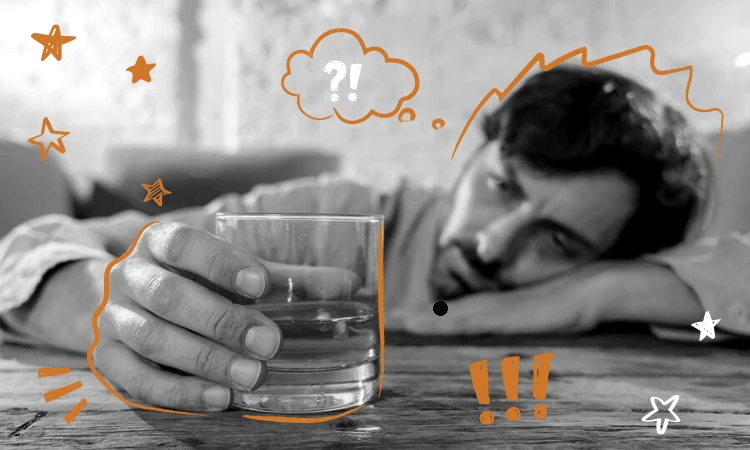
Like anxiety, depression often feels overwhelming and difficult. Patients have a sense of hopelessness, loss of interest, inner emptiness, or chronic fatigue that can lead a person to look for a quick fix. Alcohol seems to some to be an available tool that can temporarily relieve emotional pain.
Although it reduces the intensity of unpleasant feelings, alcohol does not solve the cause. On the contrary, the effects of this substance are transient and often worsen the underlying problem.
Available data indicate that individuals with alcohol dependence are approximately 3.7 times more likely to develop major depressive disorder compared to the general population. Depression is one of the common comorbidities in alcohol abuse.
This connection is clear, as alcohol affects the brain centers for emotion regulation, motivation, and stress response. The relationship between alcohol and depression functions as a mutually reinforcing cycle.
Excessive and long-term alcohol consumption can lead to changes in neurotransmitter systems, especially in the serotonin system. Serotonin is crucial in stabilizing mood, and alcohol reduces its availability and disturbs its regulation. As a consequence, the body’s ability to maintain emotional balance weakens, increasing the risk of developing or deepening depression.
On the other hand, people who are recovering from depression more often resort to alcohol as a form of self-medication. The feeling of relief can create the illusion of control over the psychological state. Still, in the long run, it leads to additional disruption of brain mechanisms, deepening lethargy, and a reduction in the capacity to cope with stress.
This reinforces a vicious circle in which depression encourages alcohol consumption, and drinking further worsens the symptoms of depression. This is why these two disorders often run parallel to one another, reinforcing and intensifying each other.
Alcohol consumption is not recommended during antidepressant therapy. Alcohol can reduce the effectiveness of therapy, increase side effects, and negatively affect mood.
In addition, certain antidepressants may increase the risk of relapse to heavy consumption. Therefore, a carefully coordinated and professional approach is necessary in the treatment of depression and alcohol use disorders.
Signs of Alcohol Dependence and How to Limit Drinking
If the doctor suspects the onset of alcohol dependence, some patterns of behavior and physical reactions may indicate the development of a problem. The following signs are often cited as warning signs:
- The impossibility of self-control regarding the amount of alcohol you consume, even though you have tried several times.
- There is a constant thought about drinking.
- You are aware of the negative consequences that alcohol has on health, but you feel that you cannot stop.
- Alcohol consumption begins to interfere with your professional or family obligations and disrupts relationships with close people.
- When you try to stop drinking, withdrawal symptoms occur, including sweating, shaking, nausea, or internal tension.
- You drink without the knowledge of others, or you lie about the amount of alcohol you consume.

According to official dietary guidelines in the United States, people who choose to drink should stay within moderate intake limits.
- Women and people who are female at birth (AFAB) – no more than one standard drink per day.
- Males and persons male at birth (AMAB) – no more than two standard drinks per day.
The National Institute on Alcohol Abuse and Alcoholism warns of the risks of episodic excessive drinking (binge drinking), which is defined as the consumption of alcohol that leads to a blood alcohol concentration of 0.08% or more. In practice, this means four or more drinks for women or five or more for men, in approximately two hours.
Heavy alcohol use includes frequent drinking and is defined by the following criteria:
- For men, five or more drinks in one day or 15 or more drinks per week.
- For women, four or more drinks in one day or eight or more drinks per week.
- According to the Substance Abuse and Mental Health Services Administration (SAMHSA) criteria, heavy use includes episodic drinking for five or more days in the previous month.
How to Handle Stressors Without Alcohol
Patients who develop alcohol dependence are actually trying to relieve internal tension, sadness, or chronic stress. Alcohol can work quickly at first and is a relatively affordable solution.
However, such a coping strategy is short-lived and harmful. Instead of removing the cause of emotional difficulties, it gradually intensifies them and disrupts mental stability. The encouraging thing is that there are healthy strategies and a mood without negative consequences.
Exercise
Regular physical activity has a great impact on psychological health. During exercise, endorphins, dopamine, and other neurotransmitters are released, promoting a sense of satisfaction, energy, and emotional stability. In addition, physical activity reduces the levels of stress hormones, such as cortisol, contributing to better tension regulation.
Unlike alcohol, which disrupts the neurochemical balance, exercise improves long-term brain function and stress resistance. An added advantage is that the activity does not have to be intense or exhausting. Mild activities such as walking, cycling, or light stretching can have a measurable positive effect on mood and sleep quality.
Meditation
Meditation is a method of mental training that strengthens the conscious direction of attention and regulates emotions. Instead of suppressing feelings, it encourages their appearance and observation without impulsive reaction.

Regular practice strengthens neural networks, which in turn encourages self-control and emotional stability. The brain becomes more efficient at managing negative thoughts, which can reduce the intensity of symptoms of anxiety and depression. This technique helps build internal resilience rather than relying on external substances for temporary relief.
Sleep
Sleep plays a crucial role in maintaining mental health. Lack of quality sleep can increase the risk of developing depressive symptoms. At the same time, depression often leads to insomnia or fragmented sleep, which represents a two-way connection between these two entities.
During sleep, the brain processes emotions, restores neurochemical balance, and regulates stress reactions. Chronic sleep deprivation disrupts these processes, reducing the body’s ability to cope with daily challenges. Establishing a regular sleep routine and creating adequate conditions for rest can help stabilize mood and strengthen stress resistance.
Eat a Healthy, Balanced Diet
Nutrition has a significant impact on brain functioning and emotional stability. The brain is a metabolically extremely active organ that depends on a constant flow of nutrients to maintain neurotransmitter synthesis, hormone regulation, and adequate cognitive function. When the body lacks key nutrients, sensitivity to stress, mood disorders, and other psychological problems increases.
Micronutrients such as selenium, vitamin D, zinc, and the vitamin B complex, as well as omega-3 fatty acids and high-quality proteins, are of particular importance because they support processes that maintain neurochemical balance.
Probiotics and antioxidants additionally contribute to the health of the gut-brain axis, regulating moods. A diet that includes nuts, fatty fish, whole grains, dairy products, eggs, fruits, and dark green vegetables can stabilize mental health.
Work Around Your Triggers
Understanding your own emotional reactions is a key step in maintaining mental health. Each person has individual situations or circumstances that can trigger stress, anxiety, or low mood. By identifying these triggers, it is possible to develop strategies that prevent them from escalating.
If the feeling of emptiness or boredom raises the level of anxiety, pre-planned activities or starting a new interest can help prevent negative states. Similarly, setting boundaries and rationalizing responsibilities can reduce overwhelm and chronic stress.
Involvement in social activities also has a significant protective effect. Spending time with loved ones, engaging in hobbies, cultural activities, or volunteering, strengthens the sense of connection and purpose. Engagements contribute to building emotional resilience and represent healthy alternatives to unhealthy coping patterns, such as alcohol abuse.