

From the old and established plans like the Scarsdale Diet, to the new and trendy nutrition fads sweeping the nation, weight loss programs have been making bold claims for decades.
The promise of these programs varies, but the most common claim is the ability to lose weight without the constant hunger and the need to exert oneself strenuously.
However, no matter which weight loss method a person wants to follow to achieve their goal, nutrition experts seem to agree on the following principle: any nutrition or weight loss program should be based on a balanced foundation and avoid completely eliminating certain groups of foods.
This means, of course, that the success of any weight loss program does not only depend on the foods we eat, but also on the structure we develop around our daily habits and lifestyles.
This, in turn, means that if the right structure is developed around these habits, the so-called “yo-yo effect,” or the tendency to lose and gain weight repeatedly, can be avoided altogether.
To make this easier, experts often cite the following strategies as useful tools to help people achieve their weight loss goals.
Set clear and realistic goals
A good place to start, according to psychologist Beatriz Gil Bóveda, is to set goals that are both clear and structured. Gil Bóveda recommends using the “SMART” system to set goals, which stands for goals that are Specific, Measurable, Achievable, Relevant, and time-based.
For example, instead of setting a vague goal such as “I want to get fit,” Gil Bóveda recommends that a person set a specific goal, such as “I will walk four times a week for 30 minutes a day over the next month.”
He also recommends that a person starts to make small changes to their routine, such as planning their meals for the week or going out for a walk each day. She recommends that a person shouldn’t try to change everything about their life, but instead concentrate on one or two changes in their routine. “Small changes can lead to big changes over time,” Gil Bóveda writes.
Planning makes a real difference
Planning for the future may be one of the most powerful tools at your disposal. Preparing meals in advance, also called batch cooking, typically involves setting aside a day of the week to cook most of what you’ll be eating in the days or week that follow. This is a practice that most experts recommend.
Having a healthy, home-cooked meal already prepared in the fridge means that it becomes much easier to pass up fast food or other unhealthy snacks after a long, exhausting day.
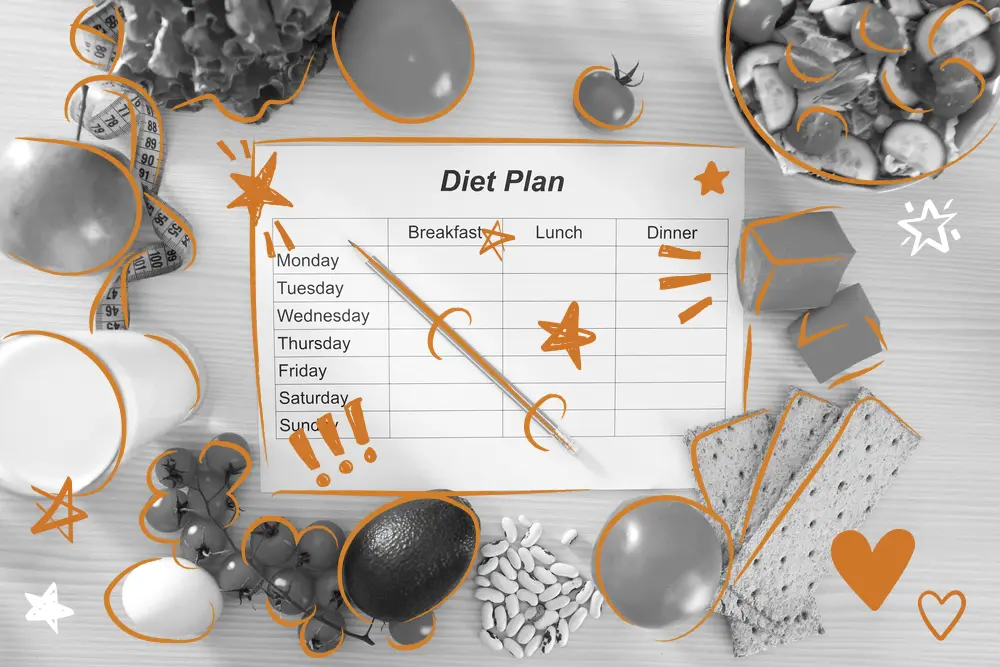
Gil Bóveda points out that organization is a key part of staying consistent. She recommends setting aside time each week to plan out meals, activities, and even downtime. She suggests using a calendar as a way of creating a structured schedule for meals, work, and other activities.
Learn to manage your stress effectively
What is happening inside our bodies has a significant effect on our efforts at losing weight. Food technologist and nutrition expert Irene Domínguez states:
“When our bodies are stressed, our digestive system is seen as a non-essential function. The production of digestive enzymes is reduced. This can cause discomfort, feelings of heaviness, and bloating after a meal.”
If you are one of those people who experience stress after a meal, Domínguez offers a simple tip that can greatly help. Take a few moments before a meal to breathe deeply. This will greatly help as it will stimulate your vagus nerve. The vagus nerve is a nerve that connects our brain with our digestive system.
By doing this, our parasympathetic nervous system, or our ‘rest and digest’ function, will be stimulated.
Try Intermittent Fasting with Some Flexibility
Intermittent fasting has been popularized by celebrities such as Chris Hemsworth and Gisele Bündchen, and Domínguez says it is a good idea, provided it is incorporated into your schedule. “On days when it feels manageable, and without being rigid, you might want to give it a shot and see what happens by leaving a 16-hour gap between your evening meal and the next morning’s breakfast.
“If it’s too hard, you might want to start with a 12-hour gap, and that’s a good place to begin. It’s a bit easier, and it’s still going to have some benefits, such as improved insulin response, reduced inflammation, and reduced bloating.”
Recognize and Celebrate Your Small Wins
Motivation also functions as a positive reinforcement, and the ability to sustain it over time is a function of recognizing small victories. Gil Bóveda, a psychologist, says people often overlook the small victories in the process of focusing on the final outcome. “It’s good to recognize what you have accomplished, even though it’s small.”
“Cooking a balanced meal, maintaining a routine, and doing it for a day is already a victory. It’s good to recognize these moments because it can help strengthen the motivation.”