

Hair loss affects a large percentage of men – more than six in ten before the age of 35, and as many as eight in ten by the age of fifty. Hair loss is almost the rule, not the exception. Despite this, many still experience it personally, even though it is a common condition. Reactions to this condition are varied.
Some patients accept a thinning and receding hairline gradually, while others decide to shave their heads immediately at the first signs of change. However, between those two extremes, a third option – timely treatment of the problem. When therapy is carefully selected and started on time, the chances of slowing androgenetic alopecia and even promoting hair regrowth can be very encouraging.
We analyzed the market in detail (composition and mechanisms of action, clinical studies, success rate, price, and available benefits). In this way, we singled out the most effective treatments for 2026. If you want a quick solution, below is a summary of recommendations you can discuss with your doctor to develop a final therapy plan.
Summary of Our Top Recommended Hair Loss Treatments for Men
Below is a brief overview of available treatment options. First, therapies are applied independently; then, combined strategies are applied. After reviewing these options, we will also list sources where these therapies can be considered.
Single Treatments
A certain number of men opt for monotherapy (use of only one drug or method). This approach may be simpler to monitor, more cost-effective, and better suited to individuals who wish to minimize exposure to multiple pharmacological effects.
- Most effective single pharmacological treatment: oral Dutasteride
- The most appropriate oral therapy (reduces the risk of sexual side effects): Minoxidil
- An oral option often considered in people with cardiovascular risk factors: Dutasteride.
- The most effective non-pharmacological approach: low-intensity laser radiation (LLLT)
- The most effective topical therapy: Finasteride in the form of a spray
- The most economical solution: Minoxidil
Combined Treatments
The following are the most commonly considered combinations:
- The combination with the strongest scientific support: Finasteride and Minoxidil
- The most intensive therapeutic protocol: oral Dutasteride, Minoxidil, topical Finasteride, and the use of a laser cap
- Strategy with relatively low risk of severe systemic side effects: topical Minoxidil with laser cap
- The most affordable combination: oral Finasteride combined with Topical Minoxidil.
Where to Find the Best Hair Loss Treatments
- The platform with the most complete therapeutic options (oral and topical): Happy Head
- The best option for masterful combinations of several drugs in one capsule: Hims
- The best choice for oral Minoxidil with additional cosmetics (shampoo and conditioner): Roman
- Recommended protocol for oral Minoxidil: Novel
- Recommended option for oral Dutasteride: Happy Head
- Recommended option for oral Finasteride: Strut Health
- Most commonly chosen option for topical Finasteride: Hims
- Effective options for topical Dutasteride: Strut Health
- A laser device with a good price-performance ratio: Kiierr 272 Premier Laser Cap
- Most affordable option for topical Minoxidil: Amazon Basic Care
- Supplement with a strong reputation: Nutrafol
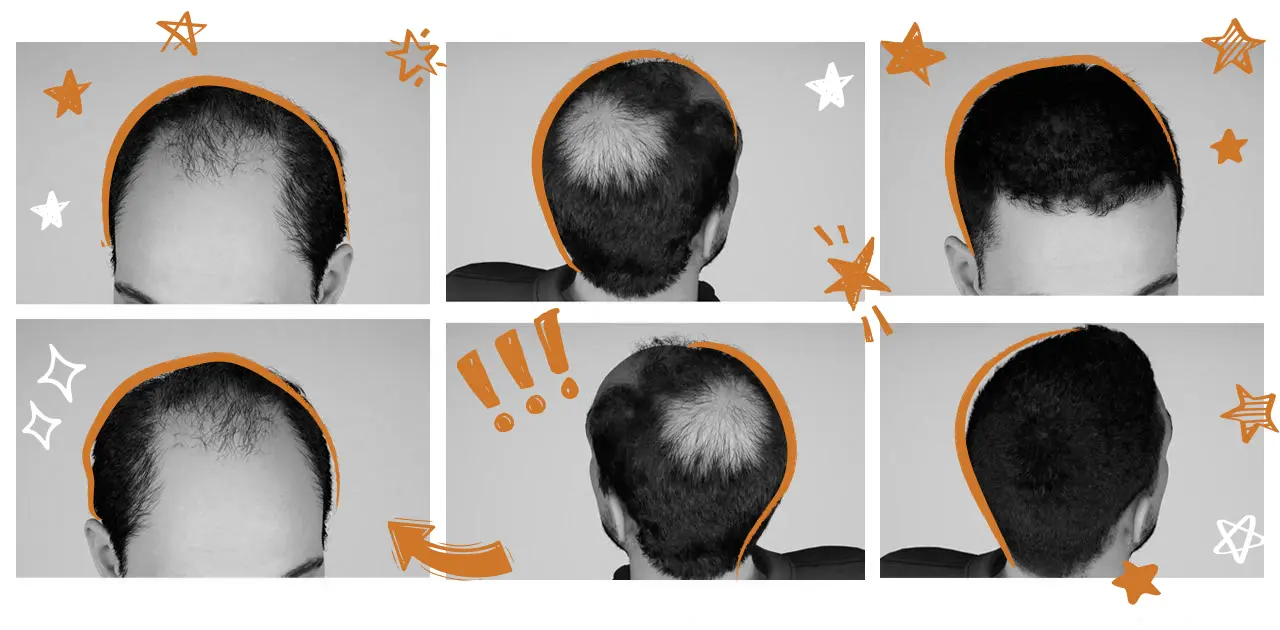
What’s a Simple, Reliable Approach to Treating Hair Loss?
Several strategies are available today, including advanced laser systems, pharmacological therapies, and various nutritional supplements. However, one protocol stands out for the amount of clinical data and documented efficacy.
The standard with the most research support involves the daily administration of 1mg of oral Finasteride in combination with 5% topical Minoxidil (solution or foam). This combination is often considered an initial therapeutic option in androgenetic alopecia.
The final decision depends on individual assessment –the doctor may recommend an alternative, including the use of both drugs in oral or topical form, depending on tolerance, comorbidities, and patient preferences.
In patients with a more intensive regimen, it is possible to combine multiple oral agents with formulated topical mixtures. However, such an approach requires a careful medical approach due to the potentially higher risk of side effects.
Taken separately, Finasteride and Minoxidil have decades of clinical use, regulatory approvals, and numerous clinical studies confirming their effectiveness. When used simultaneously, there is a more pronounced effect than with monotherapy, suggesting a possible synergistic mechanism of action – although that mechanism is still not fully elucidated.
During consultations with dermatologists, we observed that oral Minoxidil has gained significant importance in clinical practice in the last few years. An increasing number of doctors include it in their therapeutic protocols, and patient interest is continuously growing, as it has proven to be a reliable therapeutic option.
However, its application requires caution. Systemic use of Minoxidil may be associated with cardiovascular risks; patients with heart disease are often not adequate candidates for this therapy. Therefore, an individual assessment of the health condition is necessary before starting the therapy.
When it comes to availability, Roman stands out for its affordable oral Minoxidil. The price is $30 per month (billed quarterly at $90) for a daily dose of 2.5 mg. This dosage is most often cited as effective for oral Minoxidil in androgenetic alopecia.
Tablets of the same strength (2.5 mg) are available from most competitors, but therapy usually starts with 1.25 mg per day. Sometimes the therapy can be additionally increased without additional flexibility. Users are allowed to increase up to 5mg per day. This dose represents the upper limit of the effective dose range in the studies.
Below is a summary of the therapeutic approaches to hair loss, along with explanations of their mechanisms of action and recommendations for platforms that stand out in each category.
| Best use | Best value | Best value price | Wait for results | |
| Oral Minoxidil | global | Roman | $30 monthly | 4-6 months |
| Topical Minoxidil | Crown | Amazon | Amazon Basic Care | 3-6 months |
| Oral Finasteride | Hairline | Strut Health | $17 monthly | 4-6 months |
| Oral Finasteride + topical Minoxidil |
Global |
Keeps |
$28 monthly |
3-6 months |
| Topical Finasteride + topical Minoxidil |
Global |
Hims |
$35 monthly |
4-6 months |
| Oral Dutasteride | Global | Happy Head | $59 monthly | 4-6 months |
| Topical Dutasteride | Global | Strut Health | $69 monthly | 3-6 months |
| Low-level laser therapy (LLLT) | Global | Kiierr | $999 | 3-4 months |
| Concealment | Global | HairClub | $389 monthly | Same day |
| Restoration surgery | Global | HairClub | $4000+ | 3-4 months |
Top Considerations When Choosing a Hair Loss Treatment
The products included in the guide have not been superficially reviewed. Detailed tests and analyses were carried out, yielding relevant data on their effectiveness. However, statistics are not enough.
The treatment plan must suit each individual’s habits, budget, and type of hair loss. A sustainable treatment has a significantly better chance of producing stable results. Below are key questions to consider before making a decision.
Where Is Your Hair Loss?
Androgenetic alopecia is the most common cause of hair loss in men and women and usually affects the vertex, the frontal hairline, or both regions simultaneously. In the past, localization was more important when choosing a therapy.
Oral Finasteride was thought to give more pronounced results in receding the frontal line, while topical Minoxidil gave a thinning effect in the crown area.
Today, the situation is different. Dermatologists are increasingly combining therapies, enabling simultaneous action on different mechanisms of hair loss. Such an approach makes it easier to achieve even results, regardless of the localization of hair loss.
What Is Your Budget?
The financial aspect often plays a decisive role in the choice of therapy. Patients with greater financial means can combine multiple methods that work through different mechanisms, including surgical procedures, scalp micropigmentation, high-quality systems, and advanced pharmacological protocols. Such strategies increase the likelihood of visible results.
However, it should be noted that insurance companies treat hair loss treatments as cosmetic procedures. This is why insurance policies rarely cover them. For patients with limited budgets, the priority is to find a therapy with a good price-to-effectiveness ratio. Telemedicine platforms like Roman and Hims offer competitively priced subscription plans for the most popular therapies, helping save money.
However, we found the lowest costs for products available through Costco (Kirkland brand) and Amazon Basic Care. Through Costco, you can get a six-month supply of Kirkland Minoxidil solution for $18 – that’s about $3 a month. Minoxidil foam is also available, with a six-month supply costing about $50.
For those with a Costco membership, topical Minoxidil remains the most affordable option, and deals can often be found through Amazon. However, shopping without a telemedicine platform also means the absence of expert consultations that services like Hims and Roman include.
Consultations with a medical professional can be highly valuable for optimizing results and ensuring the safety of the application.
Low Maintenance is Key?
In the treatment of hair loss, the crucial factor is not efficiency but consistency. The reality is that the therapy must be coordinated with the patient’s daily habits to be implemented in the long term.
Finasteride and Minoxidil are administered continuously. Their effects last only as long as they are present in the fetus. Stopping therapy almost always leads to a gradual resumption of the decline process.
On the practical side, oral forms are easier to use. One tablet a day is easier to use than the daily scalp application of the preparations. However, systemic administration can have different side effects. If they prove to be pronounced, topical preparations may be a more acceptable option in the long term.
With drug-free aesthetic solutions, such as HairClub’s hair replacement systems, results are immediate. Such options involve periodic trips to specialized centers or a more invasive procedure. It is crucial to emphasize that even after transplantation, pharmacological therapy is often recommended to preserve existing follicles and prevent further decline.
How Quickly Do You Hope to See Results?
One of the most common reasons for stopping therapy is the unrealistic expectations of rapid changes. Hair loss is a gradual process, and slowing it takes time. Drugs such as Finasteride and Minoxidil begin to affect the follicles immediately after starting therapy, but the visual effects are not immediately noticeable.
It takes approximately 4 months of regular application for the first signs of improvement, while full effects may take longer.
Therefore, it is crucial not to stop the therapy too soon. If there are no side effects, consistency is the only objective way to judge whether the chosen regimen is producing results.
FAQ About Hair Loss Treatments
What’s the Best Hair Loss Treatment?
A combination of oral Finasteride and topical Minoxidil shows the best results, halting hair loss in most patients. More and more dermatologists are also recommending oral Minoxidil due to its effectiveness and lower likelihood of sexual side effects. The doctor may also recommend a combination of several therapies.
Can Hair Actually Grow Back?
It is difficult to “wake up” dormant follicles and restore hair to previously bald areas. Starting treatment as soon as possible is crucial, as once the follicles are dead, they cannot be regenerated.
How do you Treat a Receding Hairline?
Oral Finasteride is most effective for the frontal areas. Topical Minoxidil helps less. Combinations or treatments like oral Minoxidil and topical Finasteride may be better for the broader problem of hair loss.
How do you Treat Balding at the Top of the Head?
Baldness on the top of the head responds to Finasteride, Minoxidil, and low-intensity laser therapy. By combining these therapies, the best results can be achieved.
Why am I Losing my Hair?
The most common pattern is androgenetic alopecia (genetic baldness). Other factors include stress, medications, and nutritional deficiencies.
Do I need to See a Doctor for Hair Loss?
If hair loss is caused by drugs, chemotherapy, stress, or nutrient deficiencies, a dermatologist can help identify and rule out the cause.
Can I Ever Stop Taking my Hair Loss Treatment?
The treatments do not cause much unwanted hair growth, but stopping the application means that hair regrows to where it left off.
Do Hair Loss Treatments Cause ED?
Finasteride can cause side effects in about 2% of users. There are alternatives without these side effects, such as topical Finasteride.
Does Insurance Cover Hair Loss Treatments?
Most insurances consider hair treatments to be cosmetic, so they rarely cover them, not even for children with cancer or burn victims.